Now that you’ve decided to move forward, you’re faced with another overwhelming question: “How do I actually file for divorce in Orange County?”
Making the decision to file for divorce is never easy. Maybe you’ve spent months, or even years, thinking about it. Maybe the decision happened suddenly, and you’re still trying to make sense of everything.
Now that you’ve decided to move forward, you’re faced with another overwhelming question: “How do I actually file for divorce in Orange County?”
You start searching online, and suddenly you’re surrounded by court forms, filing instructions, financial disclosures, deadlines, and legal terminology.
I’ve worked with people who come to me with folders full of paperwork, forms they’ve attempted to complete themselves, or documents that have already been rejected by the court. They’re not confused about their decision to divorce. They’re confused about the paperwork. That’s where I can help.
I’m Karen Fischer, a professional Legal Document Assistant with over 20 years of paralegal experience. At OC Legal Service, I help people representing themselves prepare, organize, and electronically file their divorce documents at their direction.
My goal is simple: take some of the stress out of the paperwork so you can focus on moving forward.
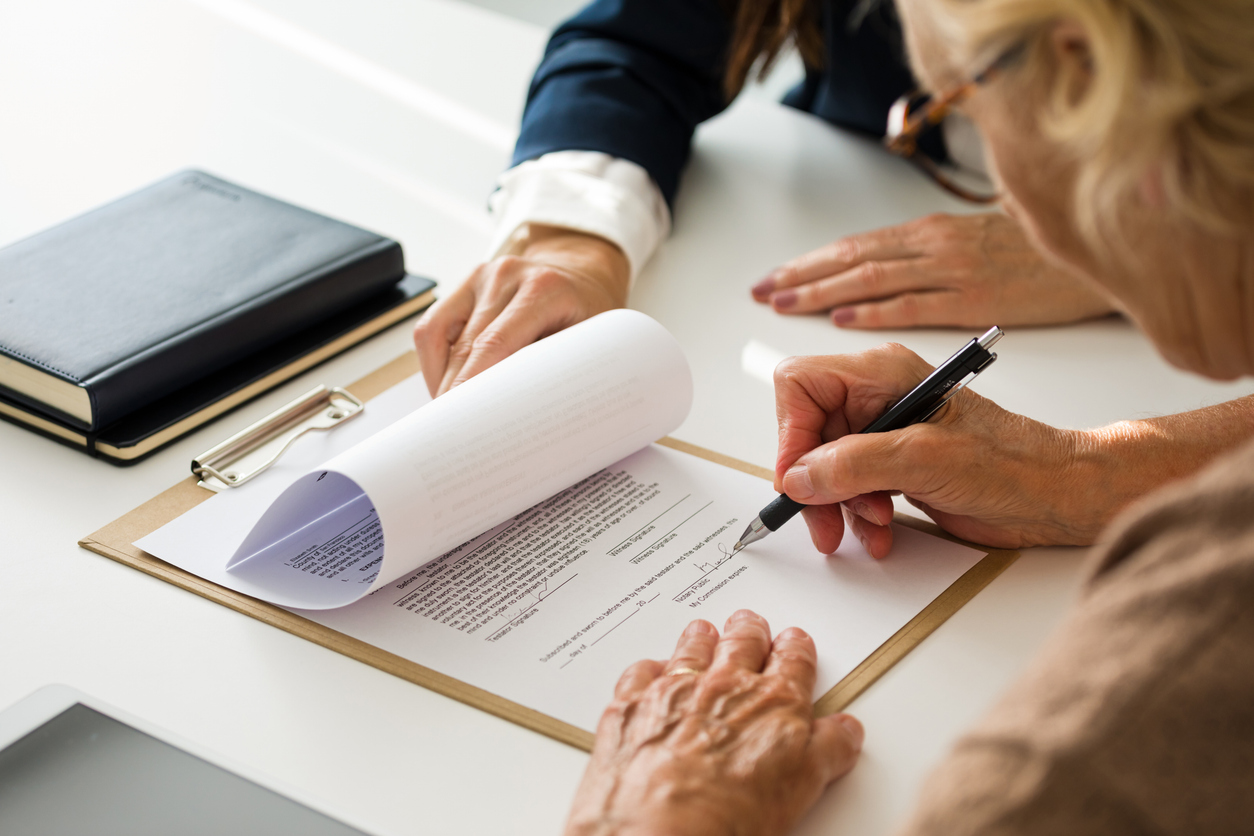
Filing for Divorce in Orange County at a Glance
- Where to file: Lamoreaux Justice Center, 341 The City Drive South, Orange, CA 92868 (Family Law clerk, Monday–Friday, 8:00 a.m.–4:00 p.m.)
- Filing fee: $435 for a Petition (FL-100) or Joint Petition; $435 for a Response (FL-120)
- Fee waiver: Request to Waive Court Fees (FW-001), if you qualify
- E-filing: Optional for self-represented filers; some documents, such as ex parte filings, can’t be e-filed
- Free help: Court self-help centers at the Lamoreaux and Central Justice Centers
- Key deadlines: 30 days to respond; 60 days for preliminary financial disclosures; at least 6 months before the divorce can be final
How to File for Divorce in Orange County: Requirements
Before filing for divorce in Orange County, it’s important to understand that California has specific residency requirements, mandatory documents, and procedures that must be followed.
Most married couples filing for divorce must meet these residency requirements:
- At least one spouse has lived in California for the past six months.
- At least one spouse has lived in the county where the divorce is filed for the past three months.
Special rules may apply to certain domestic partnerships and same-sex marriages.
Choose Your Filing Option
Most Orange County divorces begin with one spouse filing a Petition. But as of January 1, 2026, California also offers a joint petition process for couples who expect to agree on all final divorce terms. Qualifying couples can start the case together with a Joint Petition (FL-700) and pay a single $435 filing fee. Financial disclosures, final agreements, and Judgment documents are still required.
A separate summary dissolution process is available for couples who meet stricter eligibility requirements.
Choosing the right option for your circumstances may require advice from an attorney or the court’s self-help resources. Once you’ve chosen your filing procedure, the next step is preparing the documents needed to begin your case.
The Forms That Start Your Divorce
In a typical California divorce case, the initial paperwork includes:
FL-100 — Petition for Dissolution of Marriage This document officially begins your divorce case. It includes information about your marriage and the matters you’re asking the court to address.
FL-110 — Summons This document notifies your spouse that divorce proceedings have begun and provides important information about responding to the case.
FL-105 — Declaration Under UCCJEA If you have children under 18 together, this form generally provides information about your children’s residences and relevant custody proceedings.
Depending on your circumstances, other documents may also be required. You can find the official forms and instructions through the California Courts Divorce Self-Help Guide.
Not sure what information you’ll need before filling out your forms? Start with my Divorce Preparation Checklist.
How I Can Help With the Paperwork
One of the most common things I hear is: “Karen, I’m looking at these forms, and I’m afraid I’ll fill something out wrong.” I understand. Court documents can be intimidating, especially during an emotional transition.
Using the forms you’ve selected and the information you provide, I can help by:
- Preparing and formatting your divorce documents at your direction
- Checking paperwork for missing information, signatures, and administrative details
- Organizing the documents and supporting materials for submission
- Assisting with electronic court filing at your direction
You make the legal decisions. I help with the documentation. That distinction matters because I’m a Legal Document Assistant, not an attorney. I don’t provide legal advice or select legal strategies for you.
Ready to begin? Explore my Divorce Document Preparation Services or call or text 714-209-8500.
Where and How to File in Orange County
Family law cases in Orange County are filed with the Superior Court of California, County of Orange, at the Lamoreaux Justice Center, 341 The City Drive South, Orange, CA 92868.
You can file in person with the Family Law clerk or electronically. E-filing is optional for self-represented filers in Orange County. If you choose it, you’ll file through an approved Electronic Filing Service Provider, and small e-filing and payment fees apply on top of the $435 court fee. Not every family law document can be e-filed, so check the court’s Family Law eFiling exceptions list before submitting.
If you need free procedural help, the court’s family law self-help centers at the Lamoreaux and Central Justice Centers can explain procedures and review forms, though they cannot give legal advice.
Serving Your Spouse
After filing, your spouse generally must be formally served with the divorce papers. California has specific rules about how this is done:
- You cannot personally serve your own divorce papers.
- The person serving the papers must be at least 18 years old and not a party to the case.
- The server completes a Proof of Service of Summons (FL-115), which is then filed with the court.
- In some cases, papers can be served by mail with a Notice and Acknowledgment of Receipt (FL-117), but only if your spouse signs and returns it.
The responding spouse generally has 30 days after being served to file a Response.
What Happens When Something Is Filed Incorrectly?
A missing signature, incomplete information, or a forgotten form can lead to a rejection notice. Then you have to revisit the paperwork and resubmit it, which can create unnecessary delays.
How I Can Help
At OC Legal Service, I assist clients with preparing and e-filing their court documents and with organizing paperwork related to the service process. When a process server completes the required Proof of Service, I can assist with preparing the appropriate filing materials at your direction.
Already started your divorce but running into paperwork problems? Contact me. You don’t have to sort through every document by yourself.
The Paperwork That Often Catches People Off Guard
Filing your Petition is only the beginning of the paperwork. California generally requires divorcing spouses to exchange detailed financial information documenting assets, debts, income, and expenses.
Common disclosure documents include:
- FL-140 — Declaration of Disclosure: The cover document for your financial disclosures.
- FL-150 — Income and Expense Declaration: Information about your income, expenses, and financial circumstances.
- FL-142 or FL-160 — Schedule of Assets and Debts or Property Declaration: Information about assets and liabilities.
- FL-141 — Declaration Regarding Service of Declaration of Disclosure: The document filed with the court confirming that the required disclosure paperwork was served.
The spouse who files the Petition generally must serve preliminary financial disclosures within 60 days of filing. A spouse who files a Response generally has 60 days from filing the Response to serve theirs.
“What If I Don’t Have All My Financial Documents?”
This is common, particularly when one spouse has traditionally managed the household finances. You may not know where the retirement statements are, what the balances are on every account, or what happens if you leave something out.
Rather than guessing, start by gathering your financial records and listing the information you don’t have. My Divorce Preparation Checklist walks you through what to collect.
How I Can Help
I can organize the information you provide and prepare your selected financial disclosure forms according to your instructions. I can also help identify missing administrative information so you have a chance to provide it before the paperwork is completed.
If you have questions about the legal classification, valuation, or division of property, those are matters for a qualified attorney or appropriate financial professional.
What If Your Spouse Filed for Divorce First?
If you’ve just received a Petition and Summons, you generally have 30 days from the date you were served to file a Response. The primary response document is:
FL-120 — Response — Marriage/Domestic Partnership
Filing a Response also requires the $435 first-paper fee unless you qualify for a fee waiver. Additional documentation may be required depending on the circumstances.
I can assist with preparing and e-filing a Response that you’ve selected and directed me to complete. If you’re unsure how to respond or what requests to make, seek advice from a California family law attorney promptly.
What If Your Spouse Doesn’t Respond?
If your spouse is properly served and doesn’t file a Response within 30 days, the filing spouse may be able to ask the court to proceed by default using a Request to Enter Default (FL-165). The court can then decide the case based on the filing spouse’s paperwork, without the other spouse’s participation.
Default cases still require financial disclosures and a complete Judgment packet. Because a default judgment can have long-term consequences, consult an attorney if you have questions about how it may affect your rights.
What If You’ve Already Reached an Agreement?
Even after an agreement has been reached, there is still paperwork required to finalize the divorce. Depending on the circumstances, this can include a marital settlement agreement, Judgment documents, and supporting court forms.
At OC Legal Service, I assist with preparing final Judgment packets and documenting stipulated marital settlement agreements at the clients’ direction. The court must review and approve the appropriate documents before the divorce becomes final.
Learn more about my Divorce Document Preparation Services.
One question I hear frequently is: “Karen, how soon can my divorce be finalized?”
California generally requires a minimum six-month waiting period before a divorce can become final. In a traditional case, that period begins when the other spouse is served or appears in the case, whichever happens first. For a joint petition, it generally begins when the joint petition is filed.
But the six-month waiting period doesn’t mean your divorce automatically becomes final after six months. The required paperwork must still be completed, the applicable procedures followed, and the Judgment approved by the court. If forms are incomplete, disclosures haven’t been handled properly, or the final paperwork hasn’t been submitted, the process can take longer.
How I Can Help You Stay Organized
I assist with the document preparation and filing tasks you authorize, from your initial documents through the final Judgment packet. While no document preparer can guarantee court approval or a specific completion date, careful preparation can help reduce avoidable errors and resubmissions.
Why Work With a Professional Legal Document Assistant?
Not every divorce involves a courtroom battle. Many people representing themselves simply need professional help completing documents, preparing disclosures, or submitting paperwork. A Legal Document Assistant offers that help without the expense of retaining an attorney for administrative tasks.
My clients come from many different circumstances. Some are starting their divorce. Others have already filed and need help preparing a Response. And some are close to the finish line but still need their Judgment paperwork completed.
Wondering how a Legal Document Assistant compares to doing it yourself, using an online service, or hiring an attorney? See my guide to DIY Divorce in Orange County for a side-by-side comparison and cost breakdown.
Frequently Asked Questions
Family law cases are filed with the Orange County Superior Court at the Lamoreaux Justice Center, 341 The City Drive South, Orange, CA 92868. You can file in person with the Family Law clerk or choose to e-file through an approved provider.
Under California’s 2026 statewide fee schedule, the filing fee for a Petition for Dissolution of Marriage is $435. A responding spouse pays $435 to file a Response, and a joint petition is a single $435 fee. Service and optional e-filing fees may add to the total.
Yes. Self-represented filers can choose to e-file many family law documents through an approved Electronic Filing Service Provider. E-filing is optional, and some documents, such as ex parte filings, cannot be e-filed.
California allows individuals to represent themselves in divorce proceedings. A Legal Document Assistant can help self-represented clients prepare and file documents at their direction. However, a document preparer cannot provide legal advice or represent you in court. If your divorce involves complex financial matters, disagreements over custody, disputed property, or questions about your legal rights, consulting a licensed family law attorney is important.
If your spouse is properly served and doesn’t file a Response within 30 days, you may be able to request a default using form FL-165. Financial disclosures and a complete Judgment packet are still required.
California courts offer fee waivers for individuals who qualify. You can request one using form FW-001, Request to Waive Court Fees. I can assist with preparing fee-waiver documents you select using the information you provide. The court determines whether to approve the request.
Yes. Whether you’re preparing initial paperwork, responding to a Petition, organizing financial disclosures, or preparing final Judgment documents, OC Legal Service offers assistance with document preparation.
Yes. OC Legal Service also provides Child Custody Document Preparation Services for clients who need assistance preparing relevant court paperwork at their direction. Questions about custody rights, parenting arrangements, or legal strategy should be addressed with an attorney.
Professional assistance can help reduce paperwork confusion and common administrative mistakes. However, the court controls processing and approval, and California’s mandatory waiting period still applies.
Ready to Get Started? Let’s Talk.
You don’t have to understand every court document overnight, and you don’t have to tackle all the paperwork on your own. Whether you’re ready to file for divorce in Orange County, have received divorce papers, or need help completing your existing documentation, reach out today.
Karen Fischer | OC Legal Service Professional Legal Document Preparation Call or Text: 714-209-8500 Explore Divorce Document Preparation Services | Contact Karen Fischer Today
You make the decisions. I’ll help with the documents.
Important Notice: Karen Fischer is a registered Legal Document Assistant, not an attorney. OC Legal Service provides document preparation and filing assistance at the direction of self-represented clients. Karen cannot provide legal advice, recommend legal strategies, select legal forms on your behalf, or represent you in court. If you need legal advice, consult a California-licensed attorney. This article is for general informational purposes only.